Archive for the ‘Dog Words & Phrases’ Category

Dog Words & Phrases

Sunday, January 8th, 2012

Go to the Dogs

Meaning: To be ruined; to get into a bad situation from which recovery is all but impossible

Origins & History: From the time of the ancient Greeks and Romans, food deemed no longer fit for human consumption might well “go to the dogs” or be ” thrown to the dogs,” because the dogs – if they were hungry enough – would ignore the smell and taste and eat it anyway.

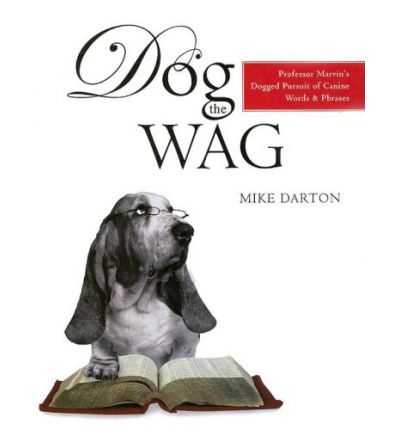
*from the book Dog the Wag by Mike Darton

Dog Words & Phrases

Thursday, December 29th, 2011

Basset

Meaning: Description of a type of long-eared, short-legged dog once used for hunting foxes and badgers (and therefore also known as a basset hound).

Origins & History: “Basset” was not originally the name of a type or breed of dog – it was simply a description, in French, of fogs that were short in stature (bas, “low”) and relatively small otherwise (-et, diminutive suffix); it was first recorded in English in 1616, since when it has apparently always been pronounced in the English fashion, and not the French.

*From the book Dog the Wag by Mike Darton

Dog Words & Phrases

Thursday, December 15th, 2011

Dog In the Manger

Meaning: A person unwilling to let other people have or do something, even though their having it or doing it is of no actual consequence or value to the first person.

Origins & History: Derives from a Fable of Aesop (sixth century BCE, although he amounts pretty much to a fable himself) about a dog who positioned himself on top of a manger – a hay trough – inside a farmyard barn and would not allow the farm’s ox or horse near the manger to eat the hay in it, although he had no desire to eat the hay himself.

* from the book Dog the Wag by Mike Darton

Dog Words & Phrases

Monday, September 26th, 2011

Barking Mad

Meaning: Loony, barmy, completely crazy (mainly in British and Australian slang)

Origins and History: Derived specifically from the connection between barking and the moon – because the moon is responsible for lunacy (Latin luna, “the moon”) and for lunatics, who are for that reason “loony”

*From the book Dog the Wag by Mike Darton

Dog Words & Phrases

Friday, September 9th, 2011

PARIAH DOG

Meaning: A dog that might have once been domesticated, but has since loss its home and turned wild, surviving meagerly on scraps and garbage on teh edge of an urban or rural village community, and being chased away on sight by local human residents.

Origins and History: A term that dates from the period of British colonial and economic domination of much of southern India, and that was first recorded in 1816.

*From the book Dog the Wag by Mike Darton

Dog Words & Phrases

Tuesday, July 26th, 2011

Tyke

Meaning: A non-pedigree and less than well-trained dog; persistently troublesome terrier; mischievious or bumptious person (especially a child).

Origins and History: Old Scandinavian tik meant a dog that was likely to cause problems, thus particularly a bitch.  U.S. English has concentrated since the seventeenth century on the more canine aspects, whereas British English has concentrated on the unruliness, especially as applied (from 1700) to people from Yorkshire or Scotland.

*From the book Dog the Wag by Mike Darton

Dog Words & Phrases

Friday, June 10th, 2011

Berryhuckle

Meaning: A round of drinks (in Scotland)

Origins and History: Coined in recent times as a deliberate distortion on top of rhyming slang: “Huckleberry Hound” implies “round” (of drinks), and “Huckleberry” is then reversed – and not Spoonerized, as claimed by some commentators – to “berryhuckle.”

From the book Dog the Wag by Mike Darton

Dog Words & Phrases

Monday, May 23rd, 2011

Cave Canem

Meaning: Beware of the dog (in Latin)

Origins and History: An expression found on the walls and gates of homes in ancient Rome and Pompeii, although the verbal imperative cave meant rather more than “beware”: it meant “be advised,” and was a legal technical term used in contracts and public proclamations

Dog Words & Phrases

Tuesday, May 3rd, 2011

Cynosure

Meaning: The center of attention, the star attraction, the magnetic draw

Origins And History: An ancient Greek astronomical reference to the Pole Star, the star that marks the north in the night sky and that in former centuries was accordingly a primary directional indicator to sailors.  From a modern viewpoint, that star – Polaris – is the final star in the constellation Ursa Minor, the Lesser Bear, but to the Greeks the whole constellation formed one end of their much bigger version of what the Romans slightly later called Canis Major, the Great Dog.  This essential guiding light for navigators was thus the very tip of the tail of the Dog: kunos oura, “Dog’s tail” – the cynosure

*From the book Dog the Wag by Mike Darton

Dog Words & Phrases

Tuesday, April 26th, 2011

Once Bitten, Twice Shy

Meaning: An event that produces a bad experience is sensibly avoided thereafter.

Origins and History: Various expressions with much the same meaning have appeared in English since before the time of Chaucer – such as “A burnt child dreads the fire” (1320) – and William Caxton’s translation of Aesop’s fables (1484) contains at least two stories with the same moral; however, it was not until the 1850s that the notion of biting arose in the context, and only in the 1890s that the exact wording of the phrase was first recorded, in Folk Phrases of Four Counties by G. F. Northall

*From the book Dog the Wag by Mike Darton

Great Dane Rescue of Southeast Texas – Save a Dane – GDRST

Polls

Do you have your dog's teeth cleaned regularly?

View Results

Loading ... Loading ...

Join our mailing list


Great Dane Rescue of Southeast Texas on Facebook